- Color
- Blue, white, or customizable
- Connection
- High-strength bolted connection
- Dimension (L*W*H)
- As per client requirement (customizable sizes)
- Door
- Other, Single/Double leaf, Roll up or sliding
- Door Material
- Other, Steel or aluminum alloy
- Earthquake Intensity
- Seismic Zone III-V compliant
- Floor Load
- 2.5 kN/m2 - 5 kN/m2 (customizable)
- Floor Material
- Steel deck with concrete topping
- Insulation
- Other, PUF, EPS, or glass wool insulation
- Material
- Other
, High strength structural steel (Q235/Q345 or IS2062)
- Open Style
- Other, Sliding, Swing
- Roof Material
- Other, Galvalume/Color coated steel sheet
- Thickness Of Wall Panel
- 50mm-100mm
- Use
- Other, Industrial, Warehouse, Factory, Commercial, Storage
- Wall Materials
- Other, Sandwich panel or profile steel sheet
- Window
- Other, Glazed/Non-glazed, Louver options
- Window Material
- Other, Aluminum alloy frame with glass
- Window Style
- Other, Fixed, Sliding
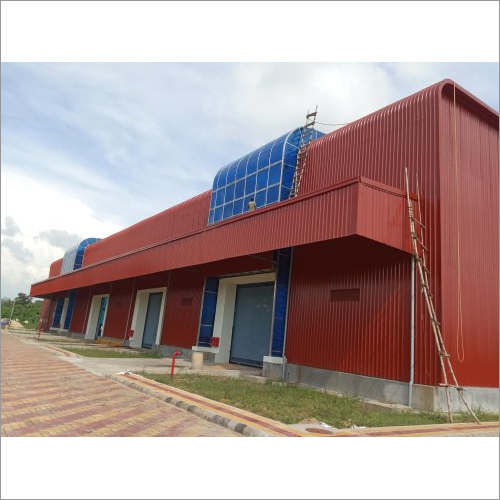
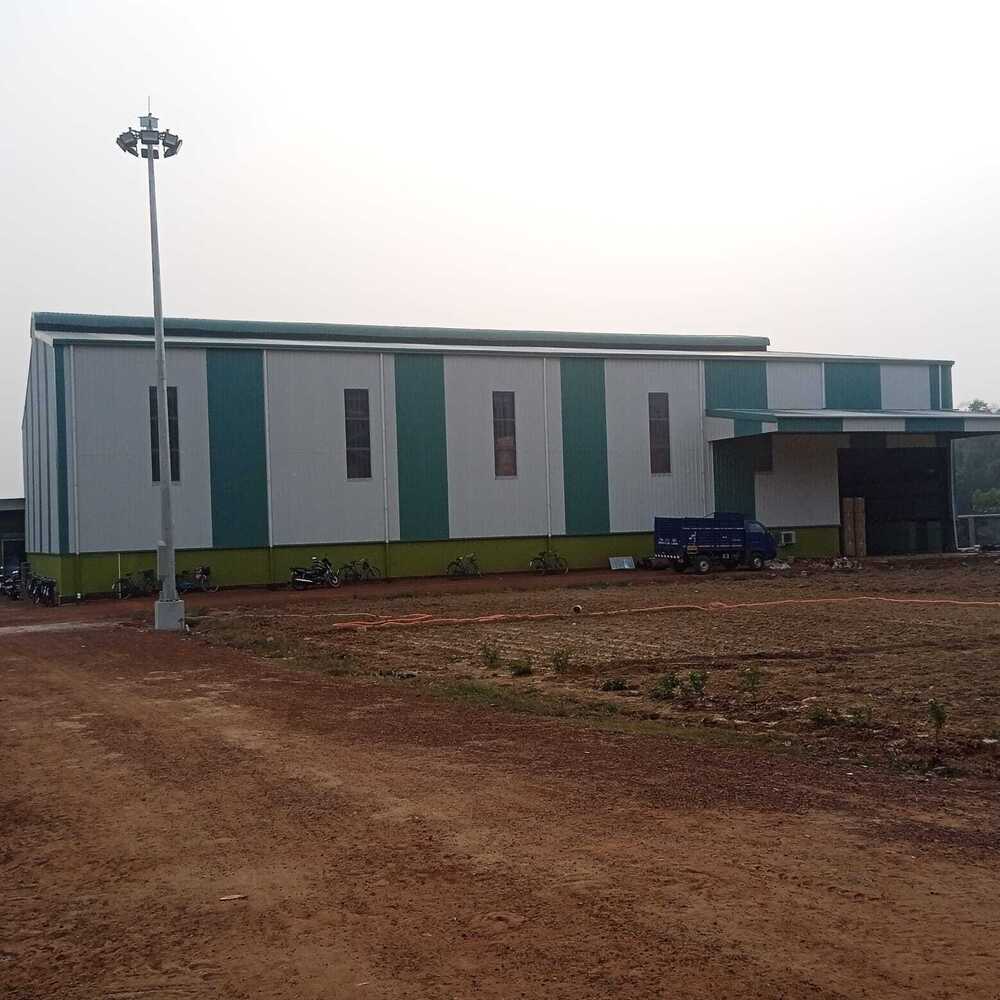
Prefabricated building steel structure is a modern construction system in which steel components are manufactured in factories and assembled at the construction site. The main structural elements, such as steel columns, beams, roof trusses, wall panels, and floor systems, are produced with high precision before transportation. This method is widely used for industrial buildings, warehouses, commercial complexes, residential apartments, workshops, airports, and public infrastructure projects.
One of the biggest advantages of prefabricated steel structures is rapid construction. Since most parts are pre-engineered and ready for installation, the time required for on-site work is greatly reduced. This helps save labor costs and allows projects to be completed faster than conventional construction methods.
Steel structures are also known for their strength and durability. Steel has a high load-bearing capacity and excellent resistance to external forces such as wind and earthquakes. At the same time, the lightweight nature of steel reduces the pressure on foundations and makes transportation easier.
Another important feature is design flexibility. Prefabricated steel buildings can be customized into different shapes, sizes, and layouts according to project requirements. Future expansion or modification is also easier compared to traditional concrete buildings.
In addition, prefabricated steel structures are environmentally friendly. Steel is recyclable and reusable, reducing construction waste and supporting sustainable development. Factory-controlled production also ensures better quality control, improved accuracy, and reduced material wastage.
Overall, prefabricated building steel structures provide an efficient, economical, durable, and sustainable solution for modern construction needs.


 English
 Spanish
 French
 German
 Italian
 Chinese (Simplified)
 Japanese
 Korean
 Arabic
 Portuguese